Key Operators – Web Publication
Weaving and coding as languages of feminist historiography
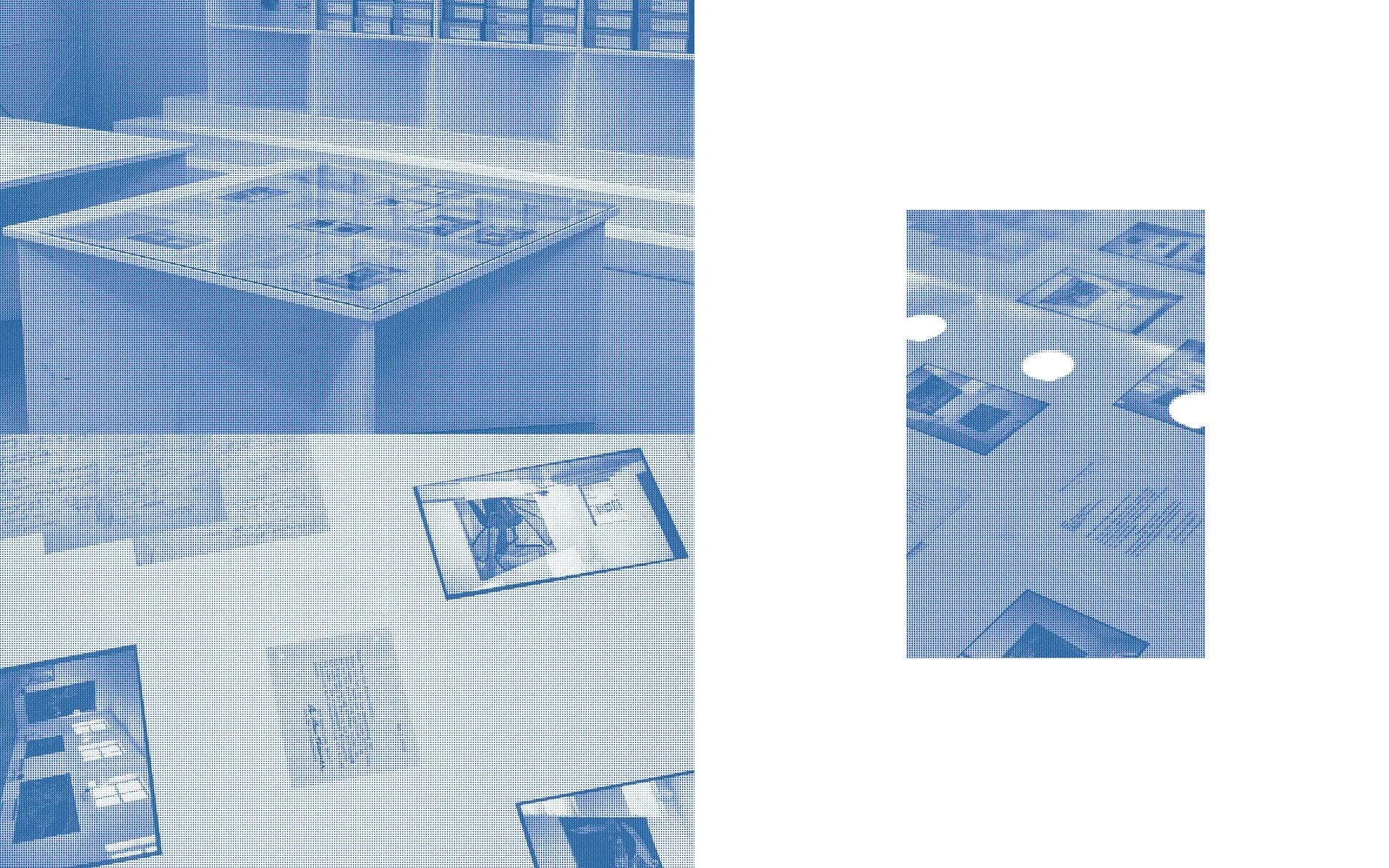
The web publication for the project Key Operators serves as a permanent digital representation of the themes and positions presented in the group exhibition of the same name. This digital publication is complemented by a limited-edition print publication. The relationship between the digital (technical) and analog (tactile) space, which is inherent in the works featured in the group exhibition, is reflected via these two complementary publication formats: the interactive online publication is extended through a physical counterpart. Both function as a record(ing), of sorts, of the comprehensive project Key Operators and offer a reflection on the exhibition, the accompanying program of events, and, above all, the contributors.
The two publications are not an aside to the exhibition, but rather a translation of its concerns, questions, and structure into the digital and the printed form(at). Much like the exhibition, they function both as information memory and information medium. Their open composition follows the intents of their spatial predecessor and are thus a transmission of its processuality, non-linearity, and multiplicity. While the web publication mediates the chronicle of the project and the documentation of the individual contributions, the exhibition is translated into two different formats on the analog level: the print publication is composed of a bound part that focuses on the visual documentation of the show, the works, and the various spatial relations. The other part is made up of unbound brochures that are each dedicated to—and in some cases conceived by—the individual contributors.
Key Operators as a whole focuses on the links between feminized labor, technological advancements, and their associated languages. The systems inscribed in weaving and coding serve as a point of departure for devising alternative ways of looking at gender and work. The project brings together an intergenerational group of artists and theorists—encompassing commissioned as well as historical contributions—that engage with the concept of weaving and its significance for technological developments, both metaphorically and structurally.
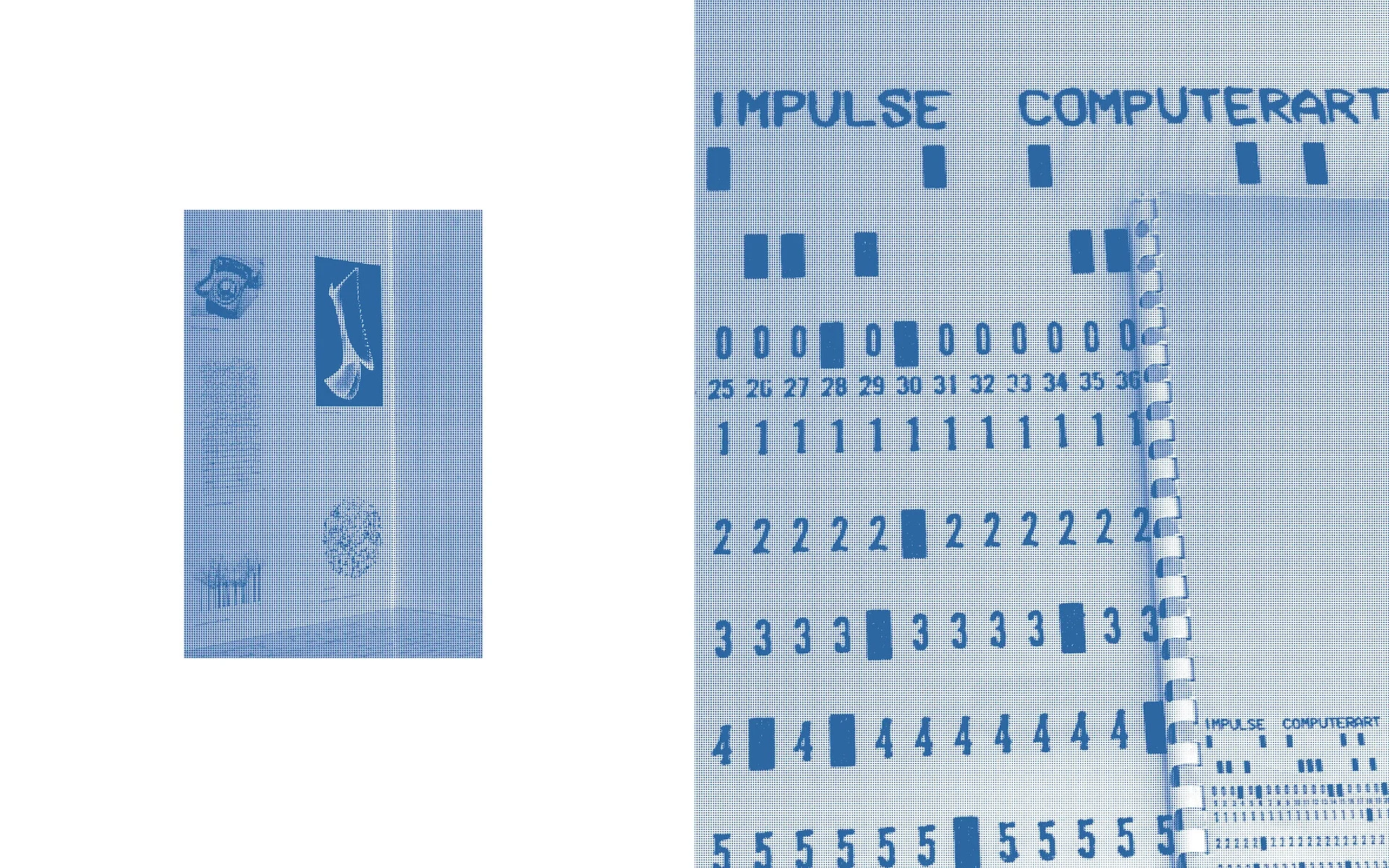
The technological histories of computing and textile weaving have been connected since the industrial revolutions of the late eighteenth and early nineteenth century. The pioneering mathematician Ada Lovelace occupies a special place within this interwoven history as one of the early figures to recognize the computational potential of the punch card system used in automated Jacquard looms,[1] which was a physical medium of binary code: a hole was 1, a blank was 0. Nevertheless, the significant role that women and their work played in the development of computer technology often remains forgotten or sidelined. In this context, we must ask why weaving is still perceived as a “feminine” activity and coding as something “masculine”? As Sadie Plant observed in her landmark study Zeros + Ones: “With ‘all the main avenues of life marked ‘male,’ and the female left to be female, and nothing else,’ men were the ones who could do anything. Women ... have functioned as ‘an ‘infrastructure,’ unrecognized as such by our society and our culture’”.[2]
Some hundred and fifty years ago, the term “computer” didn’t initially refer to a machine, but to a person’s profession that involved manually performing complex mathematical tasks as part of a computing office. “Despite the diversity of their work, human computers had one thing in common. They were women.”[3] The project’s title is derived from a similarly gendered division of labor: when photocopiers were first introduced in North American offices in the late 1940s, only trained “key operators” were allowed to use them. Tasks associated with the machine were considered menial office work and typically assigned to women. Yet, the title also offers other readings: “key” as a central figure, emphasizing the role of women in both the establishment of weaving as an independent art form and in the development of computer technology; “key” as a computer key or a loom pedal.
The artistic and theoretical positions in Key Operators employ weaving and coding as critical metaphors. The featured contributions act as narrative threads, traversing various contexts and intertwining diverse methods of storytelling in order to scout the peripheries of official historiography for its absences. In this sense, the loom and the computer are conceived as allies in the examination of history’s sidelines, which so often provide the conditions for its writing.
The story of Key Operators owes everything to the work and thinking of its contributors—artistic, theoretical, curatorial. All of them are (personal) key figures whose guidance and commitment made it all possible and to whom I am deeply indebted. As I operate my keys to complete these (web) publications, they seem to be the ones unlocking the world.
Text: Gloria Hasnay
Contributions
- Claire L. Evans
- Elsi Giauque
- Johanna Gonschorek
- Michèle Graf & Selina Grüter
- Lynn Hershman Leeson
- Pati Hill
- Charlotte Johannesson
- Lotus L. Kang
- Alison Knowles
- Beryl Korot
- James Tilly Matthews
- Katrin Mayer
- Sadie Plant
- Johannes Porsch
- Radical Software
- Bea Schlingelhoff
- Marilou Schultz
- Johanna Schütz-Wolff
- Iris Touliatou
Footnotes:
[1] The loom’s namesake is the French weaver Joseph-Marie Jacquard, who in the early nineteenth century introduced a new mechanical technique that used punched cards. As a result, it was possible for the first time to produce endless patterns of any complexity.
[2] Sadie Plant, Zeros + Ones: Digital Women + the New Technoculture (London: Fourth Estate, 1997), p. 36, quoting Luce Irigaray, This Sex Which Is Not One (New York: Cornell University Press, 1993), p. 84.
[3] Claire L. Evans, Broad Band: The Untold Story of the Women Who Made the Internet (New York: Portfolio, 2018), p. 10.
Images:
[1–7] Documentary photos: Kunstverein München e.V., 2024.
Design:
Max Schropp
The project is funded by the German Federal Cultural Foundation and the Federal Government Commissioner for Culture and the Media.